Skip to content- Substrates
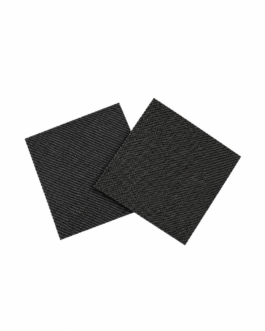
- ElectroXcel Solutions supplies high-quality carbon cloth from leading global manufacturers, including AvCarb, CeTech, Toray, and other trusted brands. These conductive carbon cloths offer excellent electrical conductivity, chemical resistance, mechanical durability, and gas permeability, making them ideal for fuel cells, water electrolyzers, gas diffusion electrodes (GDEs), batteries, supercapacitors, and a wide range of electrochemical research applications. Available in various grades, thicknesses,…
- Add to Cart
- Substrates
- Cobalt Foam is a lightweight, three-dimensional porous cobalt substrate with an interconnected metallic structure. Its open pore network provides high surface exposure while maintaining good electrical conductivity and mechanical stability, making it a versatile foundation for advanced electrochemical and catalytic applications. Key Benefits High porosity with interconnected pore structure Excellent electrical conductivity Large accessible surface area Good mechanical strength and…
- Add to Cart
- Substrates
- A highly porous and conductive material with a 3D structure that offers large surface area and excellent mass transport. Commonly used in electrocatalysis, CO₂ reduction, and energy applications.
- Add to Cart
- Substrates
- Hydrophilic Fe–Ni Foam incorporates a specialized surface treatment that increases the affinity of the metallic surface toward aqueous electrolytes and other liquid phases. The enhanced wettability promotes more uniform liquid distribution throughout the porous structure and can improve contact between the solid surface and surrounding fluid. This makes it particularly useful for electrochemical systems, liquid-phase reactions, and gas–liquid–solid processes where…
- Add to Cart
- Substrates
- Hydrophilic NiMo Foam builds on the Ni–Mo electrode architecture with an additional surface treatment to enhance wettability. Improved interaction between the electrode surface and electrolyte can facilitate liquid transport and promote effective electrode–electrolyte contact during operation. This version is particularly suited to higher-current-density alkaline electrolysis, where efficient electrolyte distribution and gas removal become increasingly important. Key Benefits Enhanced surface wettability…
- Add to Cart
- Substrates
- Hydrophilic Cobalt Foam is a surface-engineered form of porous cobalt foam developed to improve interaction between the metallic framework and aqueous electrolytes. The modified surface promotes better wetting throughout the interconnected pore structure, supporting efficient electrolyte access and improved solid–liquid contact. Its enhanced surface characteristics make it useful for electrochemical systems where electrolyte transport, gas removal, and interfacial stability are…
- Add to Cart
- Substrates
- Hydrophilic Ni–Co Foam is a surface-treated version of conventional Ni–Co Foam, engineered to improve interaction between the porous metallic structure and aqueous electrolytes. The enhanced surface wettability promotes more effective liquid distribution throughout the interconnected pore network. This makes the material particularly useful where efficient electrolyte transport, gas removal, and electrode–electrolyte contact are important for stable electrochemical operation. Key Benefits…
- Add to Cart
- Substrates
- A highly porous and conductive material with a 3D structure that offers a large surface area and excellent mass transport. Commonly used in electrocatalysis, CO₂ reduction, and energy applications.
- Add to Cart
- Substrates
- Nickel–Cobalt (Ni–Co) Foam is a lightweight, three-dimensional porous alloy substrate designed to provide a conductive and mechanically stable platform for advanced electrochemical applications. Its interconnected pore structure allows efficient electrolyte access while maintaining low resistance to fluid transport. The combination of nickel and cobalt provides a robust metallic framework suitable for use as a substrate, current-conducting support, or base for…
- Add to Cart
- Substrates
- Nickel-Iron (Ni-Fe) Foam is a lightweight, three-dimensional porous alloy designed for applications requiring a combination of electrical conductivity, mechanical strength, and high surface area. Its interconnected metallic framework provides open pathways for fluid flow while maintaining structural stability during operation. The porous architecture offers a high exposed surface area compared with conventional solid metal substrates, making Fe–Ni Foam suitable for…
- Add to Cart
- Substrates
- NiMo Foam is a robust, high-surface-area electrode developed for hydrogen evolution in alkaline water electrolysis (ALK). It combines a porous nickel foam substrate with a catalytically active nickel–molybdenum (Ni–Mo) coating, applied through a controlled continuous electrodeposition process. The three-dimensional porous structure promotes efficient electrolyte access and provides a large surface area for electrochemical reactions, while the Ni–Mo active layer enhances…
- Add to Cart
- Substrates
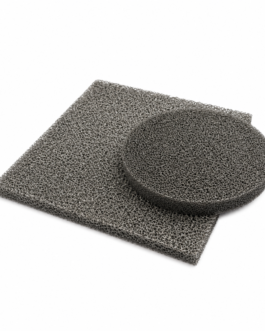
- A porous, corrosion-resistant material used as a gas diffusion layer, enabling efficient gas transport, electron conduction, and electrolyte access. Ideal for electrolysis, fuel cells, and CO₂ reduction applications.
- Add to Cart